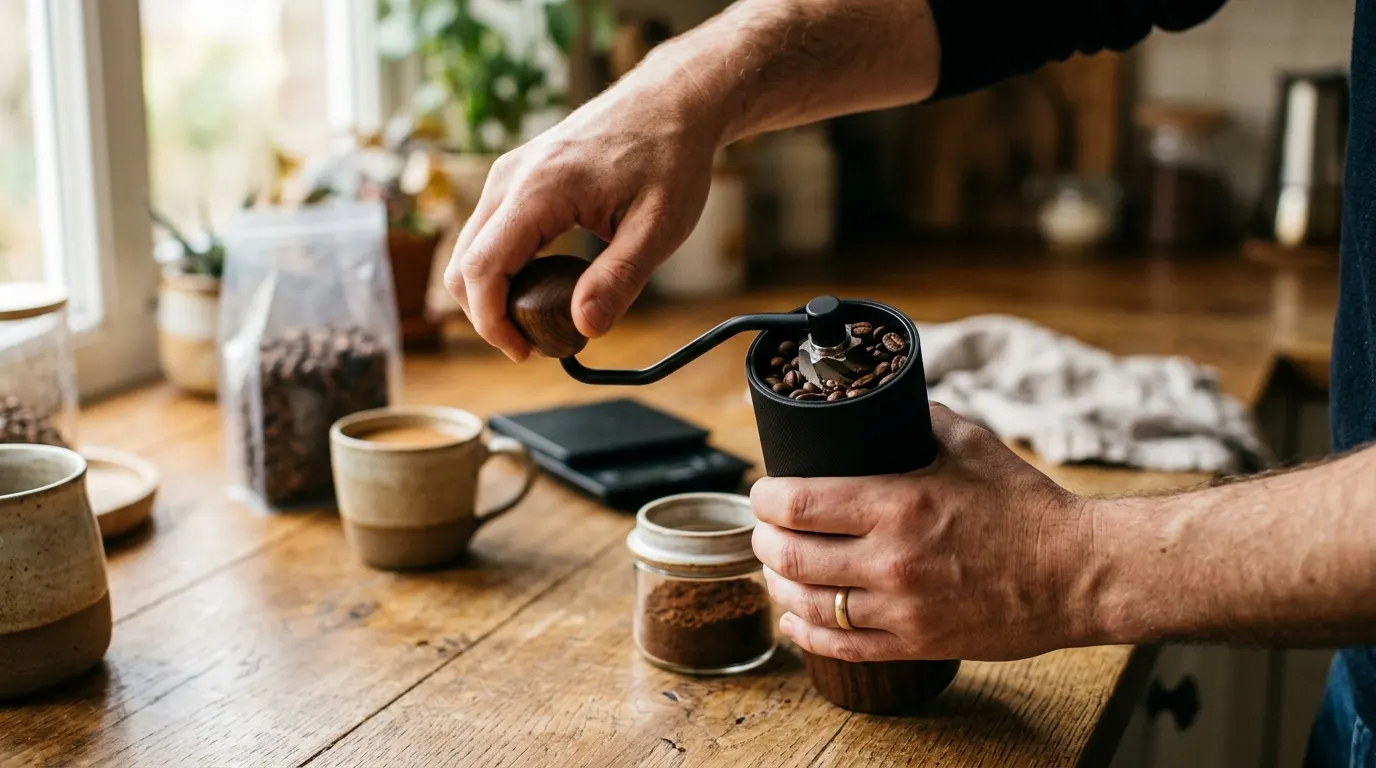
Best Manual Espresso Grinders
By PullRatio . 8 min read . Updated September 2026
A hand grinder with quality burrs can produce a genuinely consistent, espresso-fine grind without electricity or a large footprint. The trade-off is time and effort: grinding 18 grams for a double shot takes 60 to 90 seconds of steady cranking, which is manageable for one or two shots a day but adds friction to a multi-shot morning. This guide covers which hand grinders are genuinely capable of espresso-fine work, the realistic workflow trade-offs, and how to know if a hand grinder is right for your routine.
Quick answer
The Timemore C3 Pro Hand Grinder produces espresso-fine, consistent grinds with a stable burr set. Hand grinding takes 60 to 90 seconds per double shot, fine for one or two shots a day but tedious for multiple. Most daily users do better with an electric grinder; a hand grinder suits travel or low-volume setups best.
This guide contains affiliate links. PullRatio may earn a commission at no cost to you.
When a hand grinder makes sense
A hand grinder is the right choice in specific situations. If you pull one or two shots per day and view the grinding as part of the ritual rather than a chore, a quality hand grinder is genuinely capable and saves money compared to an electric equivalent. If you travel, live in a small apartment with no counter space, or want a backup grinder for power outages, a hand grinder is portable and requires no electricity.
A hand grinder is not the right choice if you pull four or more shots most mornings, or if you need quick grinding to stay on schedule. Hand grinding 18 grams takes 60 to 90 seconds of continuous effort, which compounds across multiple shots. A household making three lattes on a weekend morning will spend more time hand grinding than pulling shots.
The burr quality and design matter more in a hand grinder than in an electric one, since you cannot compensate for poor burrs with speed or particle consistency alone.
The {{timemore-c3-pro}}: stable burrs and clear settings
The Timemore C3 Pro Hand Grinder uses an S2C stainless steel conical burr set mounted on a stable central shaft that does not wobble during grinding. That shaft stability is what separates this grinder from cheaper hand grinders, which often have loose shafts that cause inconsistency.
The grind adjustment ring has 20 visible, repeatable settings with clear labeling for espresso-range adjustments. That granularity is enough for real dial-in work rather than coarse, binary adjustments. The transparent top lets you see the burrs and grind level during grinding.
Realistic workflow for the C3 Pro: fill the hopper, grind into the portafilter for 60 to 90 seconds of steady cranking, and you have a consistent, espresso-fine grind ready for distribution and tamping. No batteries, no noise, no counter footprint.
What makes a hand grinder capable of espresso
Not every hand grinder works for espresso, so checking these specifications before buying matters. Look for a burr diameter of at least 35 mm to 40 mm; smaller burrs require more time and effort for the same grind. Conical or flat burrs both work; what matters is that the burrs are steel and the tolerances are tight.
A stable central shaft without wobble is critical. Grinding espresso-fine creates high friction, which exploits any shaft play and produces inconsistent grinds. Hand grinders with loose shafts feel looser as you grind and produce noticeably less consistent results.
Clear, repeatable adjustment settings are important even though hand grinders are never as finitely adjustable as a $500 electric grinder. You need enough granularity to move between espresso and filter settings without huge jumps. The timemore-c3-pro excels here with 20 distinct settings.
Grinding technique for speed and consistency
Technique matters more with a hand grinder than with an electric one, since you control the pressure and speed directly. Hold the grinder stable on a counter or against your chest, and apply steady, moderate pressure rather than intense force. Fast, aggressive grinding heats the burrs and the coffee, which changes the grind consistency noticeably.
Use a Normcore Dosing Funnel on the portafilter to contain the grounds during grinding, which is especially helpful when grinding directly into the basket. Some hand grinders benefit from a spice jar or funnel on the hopper side to funnel grounds into the burrs more reliably.
Grind 18 grams for a double shot straight into the portafilter, which takes about 60 to 90 seconds of steady grinding for the C3 Pro. Listen to the sound change as you grind finer; the effort increases noticeably as the burr gap tightens.
Hand grinders as travel gear
A hand grinder becomes genuinely valuable when traveling, since you can carry your own grinder and pull shots at hotels, friends houses, or rental apartments without hunting for an electric outlet. The Timemore C3 Pro Hand Grinder weighs under 400 grams and fits in a small bag.
Many travel setups pair a hand grinder with a small, portable espresso maker like the Flair or ROK models, which also require no electricity. The hand-grinding ritual pairs naturally with the manual espresso-making process.
Hand grinder workflow: what to expect
Before you commit to a hand grinder for daily use, understand the full workflow. Single-dose the dose you need into the portafilter or a grind container. Clip a dosing funnel to the portafilter to contain spillage. Grind for 60 to 90 seconds while applying steady pressure, not force. Remove the portafilter and grinder. Use a Normcore WDT Tool to break up any remaining clumps, then tamp and pull.
The entire grinding step takes roughly 90 seconds for a double shot, which is slow compared to an electric grinder (8 to 12 seconds) but manageable for one or two shots. The ritual aspect appeals to some users; others find it tedious quickly.
Featured in this guide
Keep reading
Related comparisons
Related roundups
FAQ
Frequently asked questions
Can a hand grinder really produce espresso-fine, consistent grinds?+
Yes, if it has quality burrs and a stable shaft. The Timemore C3 Pro and similar hand grinders with 35 mm to 40 mm conical or flat burrs produce a genuinely consistent, espresso-fine grind. What they do not do is do it quickly; grinding 18 grams takes 60 to 90 seconds of effort.
How long does it take to grind espresso on a hand grinder?+
For a double shot (18 grams), expect 60 to 90 seconds of steady cranking on a quality hand grinder like the Timemore C3 Pro, assuming a fine espresso grind. The time increases if you grind finer or increase the dose, and decreases slightly if you already have the adjustment ring set correctly.
Should I buy a hand grinder or an electric grinder?+
Buy a hand grinder if you pull one or two shots a day, enjoy the ritual of grinding, need a portable option, or have very limited counter space. Buy an electric grinder if you pull three or more shots most mornings, need speed, or view grinding as a chore rather than a ritual.
Is a hand grinder a good first grinder for espresso?+
For most people, an electric grinder like the Baratza Encore ESP is the better first choice because the workflow is faster. A hand grinder is the right first choice if you know you will pull only one or two shots a day and are comfortable with the manual effort, or if budget and portability are the primary constraints.
Can I use the Timemore C3 Pro for filter coffee too?+
Yes. The adjustment ring covers both espresso-fine and filter-coarse settings, so a single hand grinder works for both brew methods. Many owners use their C3 Pro for travel because it handles the full range.