PullRatio

Best Espresso Grinders

Your grinder matters more than your machine. A flat burr set at the right micron gap produces the consistent particle size that makes espresso extraction predictable and repeatable. This category covers both electric and hand grinders that are genuinely capable of espresso-fine grind without clogging, channeling, or demanding a ten-minute dial-in every morning.

PullRatio may earn a commission from links below . Updated July 2026

The short answer

The Niche Zero is our top espresso grinder: a single-dose grinder with near-zero retention and a stepless ring that produces genuinely fine, fresh espresso grind and ends the upgrade itch for years. On a tighter budget, the Baratza Encore ESP is the logical first standalone grinder, with stepped espresso settings and Baratza's repair support behind it.

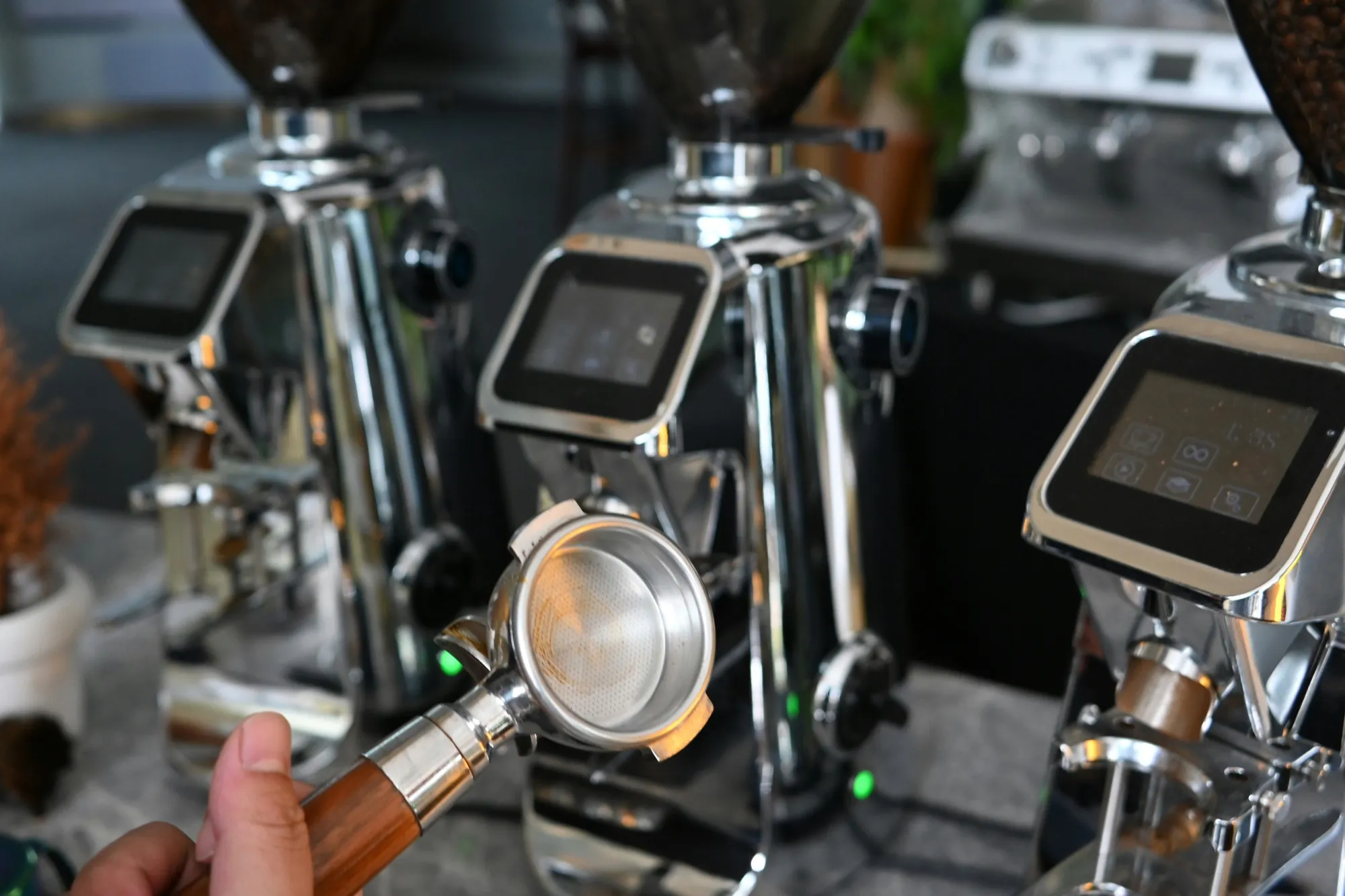
A portafilter held in front of a row of espresso grinders
A portafilter held in front of a row of espresso grinders.Photograph via Unsplash
Top Pick 4.9
Niche Zero

Niche Zero

Single-dose 63 mm conical burr grinder with near-zero grind retention that has become the community standard for home espresso in the $500 to $700 range. Uniform particle size, very low retention, and dead-quiet operation.

Price
$560-$630
Best for
Gaggia Classic Pro and Rancilio Silvia owners who want a grinder that will never be the limiting factor in their setup.
  • Near-zero grind retention means no stale coffee between doses
  • Stepless adjustment ring produces genuinely fine espresso grind
  • Community-proven particle distribution that pairs with any 58 mm machine
  • Premium price is a significant step up from entry-level options
No. 2 4.6
DF64 Gen 2 Single Dose Grinder

DF64 Gen 2 Single Dose Grinder

64 mm flat burr grinder with a stepless adjustment ring, SSP or stock burr options, and single-dose workflow at a price that makes it the flat-burr grinder the specialty coffee community recommends before the Niche Zero.

Price
$220-$280
Best for
Mid-range machine owners who want flat burr performance and the ability to upgrade burrs later without buying a new grinder.
  • 64 mm flat burrs produce the uniform particle distribution that espresso rewards
  • Stepless adjustment allows micro-dialing without stepping between settings
  • Upgradeable burr carrier accepts SSP burrs for a significant performance jump
  • Stock burrs are adequate but swapping to SSP is tempting once you hear the difference
No. 3 4.6
Timemore C3 Pro Hand Grinder

Timemore C3 Pro Hand Grinder

An S2C stainless steel burr set in a hand grinder that produces espresso-quality grinds. The travel or compact-kitchen option that the specialty coffee community trusts for its particle consistency.

Price
$75-$90
Best for
Travel baristas, apartment dwellers with no counter space, or anyone who wants to experiment with espresso before committing to an electric grinder.
  • S2C burr set produces espresso-fine grinds with genuine consistency
  • Compact and light enough to pack for travel or to use in a small apartment
  • Clear grind settings with a stable central shaft that limits wobble
  • Manual grinding for a double shot takes 60 to 90 seconds of effort
Best Value 4.5
Baratza Encore ESP

Baratza Encore ESP

The entry-level espresso grinder that Baratza built specifically for the Bambino Plus and similar home machines. 40 mm conical burrs, espresso-range stepped settings, and a low-mess single-dose mode.

Price
$170-$195
Best for
Bambino Plus owners and other entry-level machine users upgrading to a real standalone grinder for the first time.
  • Stepped burr set covers espresso range with enough granularity for most beginners
  • Baratza's customer service and repair ecosystem is unmatched at this price
  • Consistent enough to improve shots noticeably over a built-in machine grinder
  • Stepped adjustments limit micro-dialing compared to stepless grinders

The method

How we chose

We evaluated each option on fit, build quality, daily usability, and value. Our top pick, Niche Zero, earned the spot. The grinder that Gaggia Classic Pro and Silvia owners upgrade to and stop thinking about for years. The comparison above highlights exactly who each pick is best for.

FAQ

Best Espresso Grinders: FAQ

What is the difference between flat and conical burrs for espresso?+

Conical burrs tend toward a wider particle distribution that many find produces a rounder, more forgiving shot, and they are common at lower prices. Flat burrs lean toward a more uniform grind that can taste more separated and clear. Both make excellent espresso. Burr quality, alignment, and retention matter more than the conical versus flat choice itself.

Can a hand grinder really make espresso, or do I need an electric one?+

A quality hand grinder with a stable shaft and tight burrs can produce genuine espresso-fine, consistent grinds. The catch is effort and time: a double shot takes 60 to 90 seconds of cranking. For one or two shots a day it is fine and budget-friendly. For multiple shots a morning, an electric grinder removes real friction.

What does grind retention mean and why should I care?+

Retention is the ground coffee left inside the grinder after you finish. High retention wastes beans and mixes yesterday's stale grounds into today's shot, which muddies flavor and makes single dosing harder to dial in. Low-retention grinders give you back nearly what you put in, so each dose is fresh and your weights stay predictable.

Do I need a stepless grinder to dial in espresso?+

Not strictly, but you need enough fine adjustment to make small moves. Stepless grinders offer infinite micro-adjustment, which is ideal for chasing a precise extraction. Good stepped grinders with closely spaced espresso settings also work for most beans. Avoid grinders with only a few coarse espresso steps, since you cannot make the small changes dialing in requires.

How much of my budget should go to the grinder?+

Spend at least as much on the grinder as on the machine, and often more. The grinder is the single biggest variable in shot quality because it controls particle size and consistency. Within a tight total budget, weight spending toward the grinder, since a machine rarely limits results the way an underpowered grinder does.