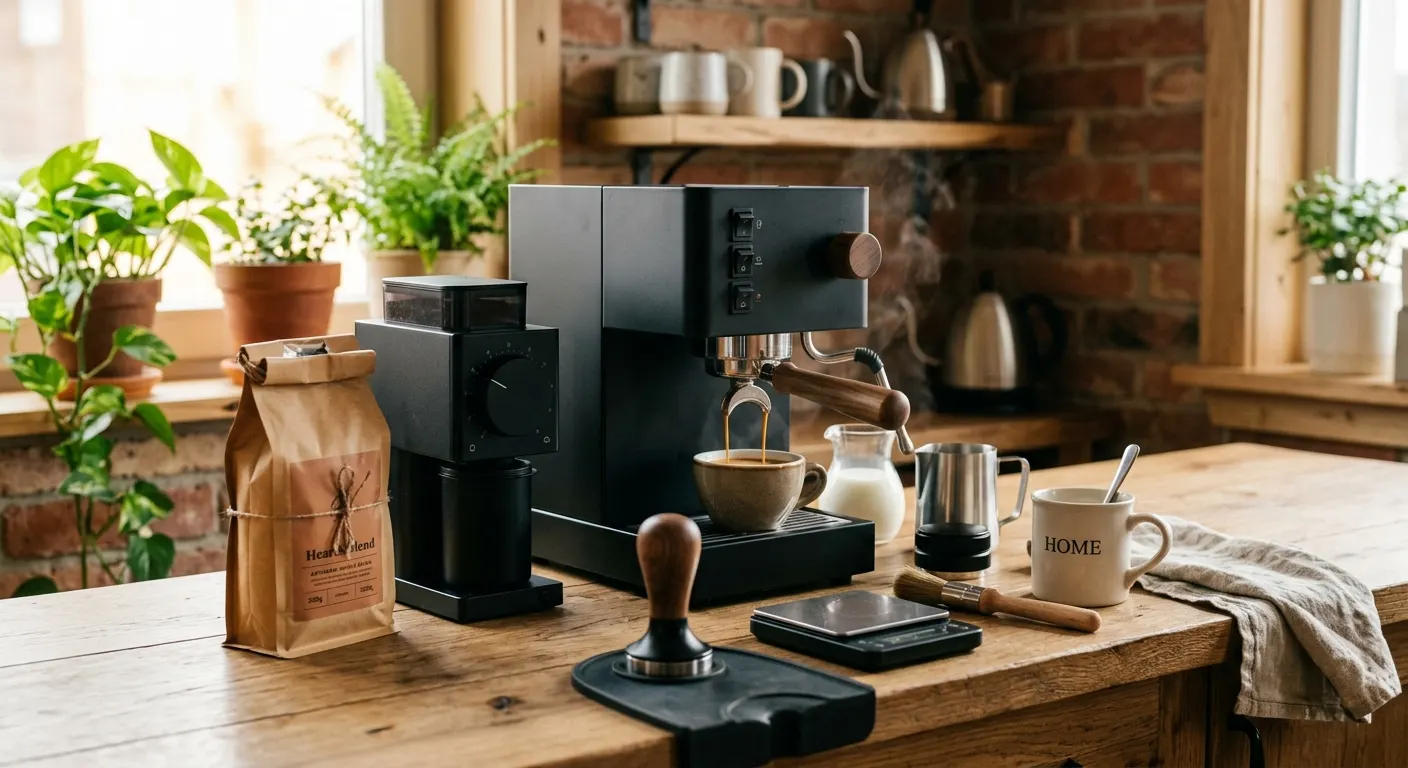
The Complete Espresso Starter Kit Under $500
By PullRatio . 10 min read . Updated September 2026
A complete home espresso setup that actually works does not require $1,500. For under $500, you can pull shots that match or beat the quality of most coffee shop espresso, with a machine you will use for years and accessories that teach you the craft rather than hiding it. The $500 budget requires real trade-offs: you will not get a dual boiler, a flat burr grinder, or a premium calibrated tamper all at once. This guide explains how to allocate the budget, which compromises are acceptable, and what to upgrade first when the budget allows.
Quick answer
A capable under-$500 build splits roughly $300 on the Bambino Plus machine, $170 on the Baratza Encore ESP grinder, and the rest on a scale, a WDT tool, and cleaning supplies. Weight spending toward the grinder, since it limits shot quality most. This setup matches most cafe espresso, with clear upgrade paths later.
This guide contains affiliate links. PullRatio may earn a commission at no cost to you.
Budget reality: where to spend and where to save
The fundamental rule in espresso is grinder first, then machine. A mediocre machine with a great grinder pulls better shots than a great machine with a mediocre grinder. Within a $500 total budget, that means spending the largest share on the grinder.
A reasonable split for a first setup: $200 on the machine, $170 on the grinder, and the remaining $130 on puck prep tools, a scale, and cleaning supplies. You end up with hardware that is capable and honest about where it stands, with clear upgrade paths when the budget grows.
Machine: Breville Bambino Plus ($300 to $350)
At $300 to $350, the Breville Bambino Plus is the machine most home espresso communities recommend as the entry point for serious espresso, not pod machines or cheap thermoblock units. The 3-second thermojet heat-up time, 54 mm portafilter, and auto-steam wand make daily use genuinely low-friction.
The auto-steam wand is a beginner-friendly feature that heats milk to a set temperature automatically. It produces decent foam and removes one variable from the learning curve. As your technique develops, switching to manual mode gives full control. The included pressurized basket is adequate to start; upgrading to a single-wall basket is the natural next step once you are dialing in grind.
At $300 to $350, the Bambino Plus leaves roughly $150 in the budget for everything else, which is where the compromises get real.
Grinder: Baratza Encore ESP ($170 to $195)
The Baratza Encore ESP produces high-resolution espresso grinds and includes a dosing cup for 54 mm portafilters, making it a practical match for the Bambino Plus.
The stepped burr set covers the espresso range with enough individual settings to narrow in on the right dose. The grind consistency is not flat-burr quality, but it is consistently good enough to improve shots over any built-in machine grinder. Baratza service and repair support is the best in the entry-level segment.
If the budget is very tight after the machine purchase, the Timemore C3 Pro Hand Grinder hand grinder at $75 to $90 is a capable temporary solution. It produces espresso-fine grinds but requires 90 seconds of hand grinding per double shot.
Scale: Timemore Black Mirror Nano ($50 to $70)
A scale is not optional for dialing in espresso. Pulling shots by time alone without knowing the yield produces inconsistent results even when everything else is right. The Timemore Black Mirror Nano Scale gives you 0.1 g resolution at a price that leaves room in the budget for other tools.
Place the scale on the drip tray before locking in the portafilter, tare it, and track the yield while pulling. A starting ratio of 18 g in and 36 g out in 25 to 30 seconds is a standard starting point. Adjust grind coarseness until that ratio produces a shot that tastes balanced rather than sour or bitter.
Puck prep: WDT tool and calibrated tamper
With the remaining budget after machine, grinder, and scale, prioritize a WDT tool over the calibrated tamper if you have to choose. Channeling from uneven distribution is the most common shot problem for beginners and the most impactful single fix.
The IKAPE WDT Tool at $15 to $25 is the budget entry. The Normcore WDT Tool at $25 to $35 is the step up worth making when you know the technique is working for you. Add the Normcore Calibrated Tamper V4 in 53.3 mm for the Bambino Plus as your first upgrade once the budget allows.
A Normcore Dosing Funnel in 54 mm clips to the portafilter and contains grounds during the WDT stir. It is a small quality-of-life buy that makes the workflow less messy at any budget.
Cleaning: what you need from day one
The Bambino Plus has a solenoid and a group head that need weekly cleaning to maintain extraction quality. Buy Urnex Cafiza Espresso Machine Cleaning Tablets when you buy the machine, and use them with the supplied cleaning disc during the cleaning cycle. The cost is $12 to $18.
Set a weekly reminder to run a cleaning cycle. One Cafiza tablet per cycle, five to ten backflush cycles with water in between. This takes five minutes and makes the difference between a machine that tastes great after two years and one that tastes progressively worse. Add a Espresso Group Head Cleaning Brush for the 30 seconds of brushing after every session.
What to upgrade first: the roadmap
Once you are comfortable with the Bambino Plus and Encore ESP setup, the upgrade sequence that produces the most improvement per dollar goes like this.
First, swap the pressurized basket for a single-wall basket if the Bambino Plus came with only the pressurized option. The Breville-made single-wall basket works; there is no 54 mm IMS option, but aftermarket single-wall baskets for 54 mm are available.
Second, add a Normcore Calibrated Tamper V4 in 53.3 mm if you have not already. Consistent pressure makes your dial-in numbers more reliable.
Third, when you are ready to upgrade the grinder, the next step up from the Encore ESP is the DF64 Gen 2 Single Dose Grinder for flat-burr performance, or the Niche Zero for the workflow most Classic Pro owners eventually reach. The machine can handle either grinder; you will not outgrow the Bambino Plus hardware with a better grinder unless you decide you need a 58 mm machine for the accessory selection.
Featured in this guide
Keep reading
Related comparisons
Related roundups
FAQ
Frequently asked questions
How should I split a 500 dollar espresso budget?+
A sensible first build is roughly 300 dollars on the machine, 170 on the grinder, and the remaining 130 on puck-prep tools, a scale, and cleaning supplies. Weight spending toward the grinder, since it is the biggest variable in shot quality. The goal is capable, honest hardware with clear upgrade paths as the budget grows.
Can I really make good espresso for under 500 dollars?+
Yes. A Bambino Plus paired with a real grinder, a scale, and basic puck-prep tools can match or beat most cafe espresso. The trade-offs are real, no dual boiler, no flat-burr grinder, no premium tamper at once, but none of those cap quality for a careful home barista. Technique and fresh beans matter more than spend at this level.
If money is tight, what do I buy first and what can wait?+
Buy the grinder, machine, scale, and a WDT tool first, since channeling and inconsistent grind are the most common beginner problems. A calibrated tamper, a precision basket, and a distribution tool can wait. Cleaning supplies, a tub of cleaning tablets used with the supplied cleaning disc, are cheap and should be bought with the machine, not deferred.