PullRatio

Best Espresso Machine Cleaning and Maintenance

Espresso machines that are not cleaned regularly taste sour, pull slow, and break early. Cafiza tablets, descaler, backflush discs, and group head brushes are not glamorous purchases but they are the reason a $600 machine still pulls great shots five years later. This category covers the maintenance consumables and tools that every home barista should have on hand.

PullRatio may earn a commission from links below . Updated July 2026

The short answer

Urnex Cafiza tablets are the one cleaning purchase to make first: the cafe-standard backflush tablet that dissolves coffee oil from the group head and solenoid valve, used weekly or every 20 to 30 shots. Cleaning and descaling are separate jobs, so add Puly Caff Descaler for the mineral scale inside the boiler every one to three months.

Top Pick 4.8
Urnex Cafiza Espresso Machine Cleaning Tablets

Urnex Cafiza Espresso Machine Cleaning Tablets

The industry-standard backflush and group head cleaning tablet used in commercial cafes. Dissolves coffee oils from the group head, shower screen, and solenoid valve with a standard backflush cycle.

Price
$12-$18
Best for
Any home barista who owns a machine with a three-way solenoid valve, which includes every semi-automatic on this site.
  • Industry standard used in specialty coffee shops worldwide
  • Dissolves stubborn coffee oil buildup that water alone cannot shift
  • Works with any E61, vibration pump, or solenoid machine that accepts backflushing
  • Requires a blind basket (backflush disc) to use, sold separately
No. 2 4.7
Urnex Cafiza Espresso Machine Cleaner Powder

Urnex Cafiza Espresso Machine Cleaner Powder

The powder form of the Cafiza formula for deeper group head soaks and portafilter basket cleaning. Used to dissolve stubborn coffee oil and residue on metal parts that backflushing alone leaves behind.

Price
$15-$20
Best for
Baristas who want to soak portafilters, baskets, and shower screens monthly in addition to weekly backflushing.
  • Powder form allows portafilter and basket soaks that remove baked-on oil
  • Same Cafiza formula used in professional espresso machine service
  • More economical per cleaning than individual tablets for frequent cleaners
  • Requires measuring; tablets are more convenient for standard backflush cycles
No. 3 4.6
Puly Caff Espresso Machine Descaler

Puly Caff Espresso Machine Descaler

A food-safe liquid descaler that removes calcium and lime scale from the boiler, thermoblock, and internal water paths without damaging seals or metals. Used by Italian espresso technicians.

Price
$10-$15
Best for
Machine owners in hard-water areas who want a trusted, correctly formulated descaler rather than a generic supermarket option.
  • Citric-acid-based formula safe on all machine metals and seals
  • Single-use sachets make dosing correct without measuring
  • Removes scale buildup that degrades boiler temperature stability over time
  • Descaling should be done every 1 to 3 months depending on water hardness
No. 4 4.5
Cafiza Blind Filter Basket (Backflush Disc)

Cafiza Blind Filter Basket (Backflush Disc)

A solid rubber or stainless backflush disc that fits the standard 58 mm portafilter. Required for running Cafiza cleaning cycles through the group head and solenoid.

Price
$8-$12
Best for
Every Gaggia Classic Pro, Rancilio Silvia, and Breville owner who plans to clean properly.
  • Essential for running Cafiza backflush cycles on solenoid-equipped machines
  • Stainless steel versions last years without deforming
  • Cheap enough to keep a spare
  • Size must match portafilter basket diameter exactly
No. 5 4.5
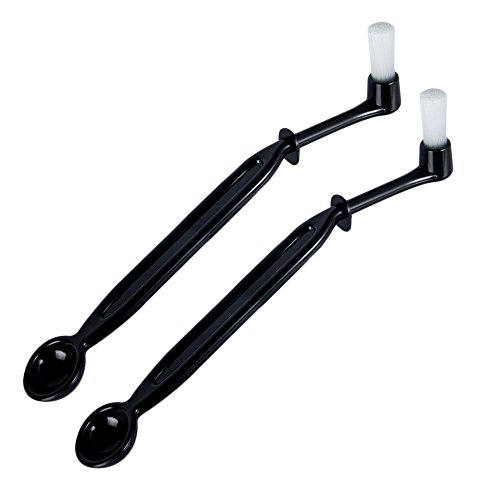
Espresso Group Head Cleaning Brush

Espresso Group Head Cleaning Brush

A two-sided nylon brush for scrubbing the shower screen, dispersion plate, and group head gasket after each session. Removes the fine coffee particles that Cafiza tablets cannot reach without water.

Price
$8-$15
Best for
Daily machine users who want to remove fresh grounds from the group head after every session, not just weekly cleanings.
  • Two-sided design covers the screen face and the dispersion block
  • Nylon bristles tough enough to remove dried grounds without scratching
  • Cheap and should be replaced every 6 to 12 months
  • Manual effort required; not a substitute for Cafiza backflushing
No. 6 4.4
BWT Magnesium Mineralizer Water Filter Jug

BWT Magnesium Mineralizer Water Filter Jug

A water filter pitcher that reduces limescale-forming calcium while adding magnesium, which the specialty coffee community has identified as a mineral that improves espresso extraction quality.

Price
$30-$45
Best for
Home baristas in hard-water regions who want to protect their machine and improve their water quality simultaneously.
  • Reduces calcium that causes scale buildup in boilers and thermoblocks
  • Adds magnesium ions linked to improved espresso extraction in research
  • Reduces descaling frequency significantly in hard-water areas
  • Filter cartridges need replacement every 4 to 6 weeks at typical espresso volumes

The method

How we chose

We evaluated each option on fit, build quality, daily usability, and value. Our top pick, Urnex Cafiza Espresso Machine Cleaning Tablets, earned the spot. The one cleaning tablet worth buying. Use weekly if you pull shots daily, or after every 20 to 30 shots. The comparison above highlights exactly who each pick is best for.

FAQ

Best Espresso Machine Cleaning and Maintenance: FAQ

How often should I backflush my espresso machine?+

If you pull shots daily, backflush with a cleaning tablet roughly once a week, or after every 20 to 30 shots. This clears coffee oil from the group head, shower screen, and three-way solenoid valve. A plain water backflush after each session helps too. Only machines with a solenoid valve can be backflushed, which covers most semi-automatics.

How often do I need to descale, and how is it different from backflushing?+

Descaling removes mineral scale from inside the boiler and water paths, while backflushing removes coffee oil from the group head. They are separate jobs. Descale every 1 to 3 months depending on water hardness, using a proper espresso descaler. In hard-water areas do it more often, since scale degrades temperature stability and can eventually kill the heating element.

Can I use vinegar to descale instead of a dedicated descaler?+

It is not recommended. Vinegar can be harsh on internal seals and metals and leaves a smell that is hard to rinse out. A purpose-made citric-acid descaler is correctly formulated for espresso machine internals and safe on the components. The cost difference is small, and protecting the boiler is far cheaper than replacing it.

Does filtered water reduce how often I have to descale?+

Yes. Scale comes from calcium and magnesium dissolved in your water, so reducing that mineral load slows buildup and extends the interval between descales. A filter jug that lowers calcium can meaningfully stretch your schedule in hard-water areas. Avoid distilled or zero-mineral water, though, since it can leach metals and dulls extraction.

What is the bare minimum cleaning routine for a daily user?+

Brush the group head and wipe the steam wand after every session, backflush with a cleaning tablet weekly, and descale every couple of months. That is roughly 30 seconds daily, five minutes weekly, and half an hour quarterly. This modest routine is the difference between a machine that lasts years and one that pulls progressively worse shots.